Get Cited in AI Overviews: 2026 Guide After Google's October Update
Learn how to get cited in AI Overviews after Google's October 2026 links update. Our studio's playbook: data-backed tactics, structure rules and tracking.

On 15 October 2026, Google announced by product head Nick Fox that it is pushing more links, placed higher, directly inside AI Overviews and AI Mode responses. If your traffic strategy still treats an AI answer as a dead end, update it today. The same company that taught users to stop clicking is now, deliberately, giving them reasons to click again — and deciding which publishers get those clicks.
We have spent 2026 watching clients lose traffic to AI Overviews, then win pieces of it back through citations. The October update changes the mechanics in your favour, but only if your pages are built to be cited. This is our full playbook: what changed, why citations replaced rankings as the prize, what a citable page looks like, the technical plumbing, how to measure it, and what to stop doing.
We work across two markets — the US, where AI Overviews now shape most informational queries, and Pakistan, where they are arriving fast on mobile-first searches. The tactics below hold in both, but the competitive texture differs: American queries are citation battlegrounds; Pakistani queries are often citation vacuums. That difference is an opportunity if you move before your competitors do.
What Google changed on 15 October 2026
Google rarely ships five search-visible changes at once. On 15 October 2026 it did, with product details from Hema Budaraju, VP of Product Management for Search. Every one of them touches how publishers get credited — and clicked.
More inline links, placed higher
AI Overviews and AI Mode answers now carry more inline links, and crucially, those links sit higher in the response. Previously, citations were an afterthought: tiny link icons buried under paragraphs of generated text. Now the link is part of the sentence itself. Google is placing publisher links higher inside AI summaries, which early coverage suggests will raise cited-source click-through meaningfully.
The official-site box and Dive Deeper
Google is testing a box at the very top of an AI Overview for task-oriented queries — the kind of question where one authoritative site exists, like checking a bank's official hours or a software tool's pricing page. If your site is the canonical source for a task, this box is a citation on steroids: top position, official framing.
Separately, the end-of-response "Dive Deeper" module now includes image thumbnails alongside links. A strong featured image on your article is no longer a social-media nicety; it is part of how your citation renders in the answer.
News expands: carousels, Preferred Sources, the News AI pilot
News carousels in search are expanding to more countries and languages, and Google is highlighting each reader's Preferred Sources inside AI answers. Preferred Sources usage has grown more than sevenfold since early 2026, according to Google's announcement. Being a reader's preferred source now influences whether your content appears in their AI responses.
On the licensing side, Google's News AI pilot programme — under which it licenses publisher content — has grown to more than 400 publications. If you publish original reporting, licensing may become a direct revenue line, not just a traffic one.
Video results get clickable creator names
AI Mode is testing clickable creator and publisher names in video results. This is small but important: video is becoming a citation surface. A YouTube explainer with a real byline can now earn branded clicks from inside an AI answer, not just from YouTube's own search.
What this actually means
Taken together, Google is rebuilding attribution inside AI answers. The update is a response to a year of publisher fury over zero-click search — and to regulation breathing down its neck. For you, the implication is simple: the citation economy is now real, Google is investing in it, and the winners will be publishers whose content is machine-readable, quotable, and verifiable.
Do not mistake this for charity. Google's hand was forced by publishers, regulators, and its own licensing negotiations. But the mechanics favour whoever is ready. Higher inline links mean the citation click-through pool — small as it is — now flows to pages that answer the specific sub-question the paragraph addresses. That rewards granular pages over mega-guides. It also punishes vagueness harder than before: a paragraph the model cannot attach a link to gets no link, and a page full of unlinkable paragraphs is invisible even when it is "used".
Why citations are the new rankings
Rankings still matter. But the prize moved.
Zero-click is now the majority behaviour
SparkToro's analysis of Similarweb's US clickstream data (June 2026) found that 68.01% of Google searches between January and April 2026 ended with no click to any external site — up from 60.45% in 2024. Seven out of ten searches resolve without a single outbound click. That is not a trend; it is the market.
Pew Research Center's parallel work put numbers on the AI effect: sessions showing an AI Overview clicked through at around 8%, versus roughly 15% without one. Only about 1% of AI Overview sessions produced a click on a cited source. Google publicly disputed Pew's exact figures — read that how you like; even halving the gap leaves a brutal picture.
The CTR collapse, measured
The damage is not evenly spread. It concentrates exactly where AI answers are most complete:
- Ahrefs' 2025 study of 300,000 keywords found CTR dropping up to 34.5% when an AI Overview appeared. Its 2026 follow-up found position-one CTR cut by roughly 58% on Overview queries.
- Seer Interactive's April 2026 study (53 brands, 5.47 million queries, 2.43 billion impressions) tracked organic CTR on AI Overview queries falling from 3.19% in January 2025 to 1.31% in December 2025, then partly recovering to 2.36% by February 2026 — against 3.82% on queries with no Overview.
- FirstPageSage's 2026 report measured organic CTR of 8.7% collapsing to 3.6% on AI Overview SERPs (a 58.6% fall), or 87 down to 36 clicks per 1,000 impressions.
- Agarwal and Sen's 2026 randomised experiment found outbound organic clicks falling nearly 40%.
Here is the part most commentary skips: the overlap between the top-10 organic results and AI Overview citations collapsed from 75% in mid-2025 to 17–38% in early 2026. Ranking first no longer predicts being cited. They are two separate games now, with different rulebooks.
Fuel Online's query-type analysis also measured a 93% zero-click rate across tested AI Mode query sets. If your traffic is informational, you have two choices: be cited, or be invisible.
The citation premium
Citations are not just consolation prizes. Seer Interactive found brands cited in an Overview earned roughly 120% more organic clicks per impression than uncited brands. FirstPageSage found visitors arriving from AI SERPs spent 23% longer on site and converted at 2.6% versus 1.7% — though the overall math still showed a net lead decline of about 37%. Position one remains valuable, but its multiple over position ten compressed from 13.0× to 8.4× on Overview queries.
Our studio reads it this way: citations are the new top-of-funnel. The clicks you get are fewer but warmer. Position in the answer matters more than position under it.
Anatomy of a page that gets cited
We audit dozens of pages a month against AI citation behaviour. The ones that get quoted share a structure you can copy.
Lead with the answer, not the essay
The single most predictive trait of a cited page: a direct answer in the first 100 words, written in a self-contained 40–60 word block. Not a teaser ("In this article we explore…"). Not a story. An answer, in plain language, that the model can lift verbatim.
Write it as if someone asked you the question at a meeting and you had thirty seconds. If your opening paragraph cannot be quoted on its own, rewrite it. This is the opposite of old SEO, which buried the answer under ads and introductions. We have seen pages gain citations within weeks of simply moving the direct answer to the top.
Data with names attached
Models prefer to cite numbers that come with a named source. "68.01% of searches end without a click (SparkToro/Similarweb, June 2026)" gets cited; "most searches end without a click" does not. Every statistic on a citable page should carry three things: the figure, the source name, and the date. Unsourced numbers read as opinion to a citation model — and opinion gets summarised, not linked.
For our US and Pakistan clients, this has a local dimension: Pakistan-market data is scarce, which means publishing it makes you the cited source by default. A Lahore-based SaaS studio publishing "the average freelance web project in Pakistan costs PKR X" becomes the number every AI answer quotes. Scarcity is a citation moat.
Structure the parser can lift
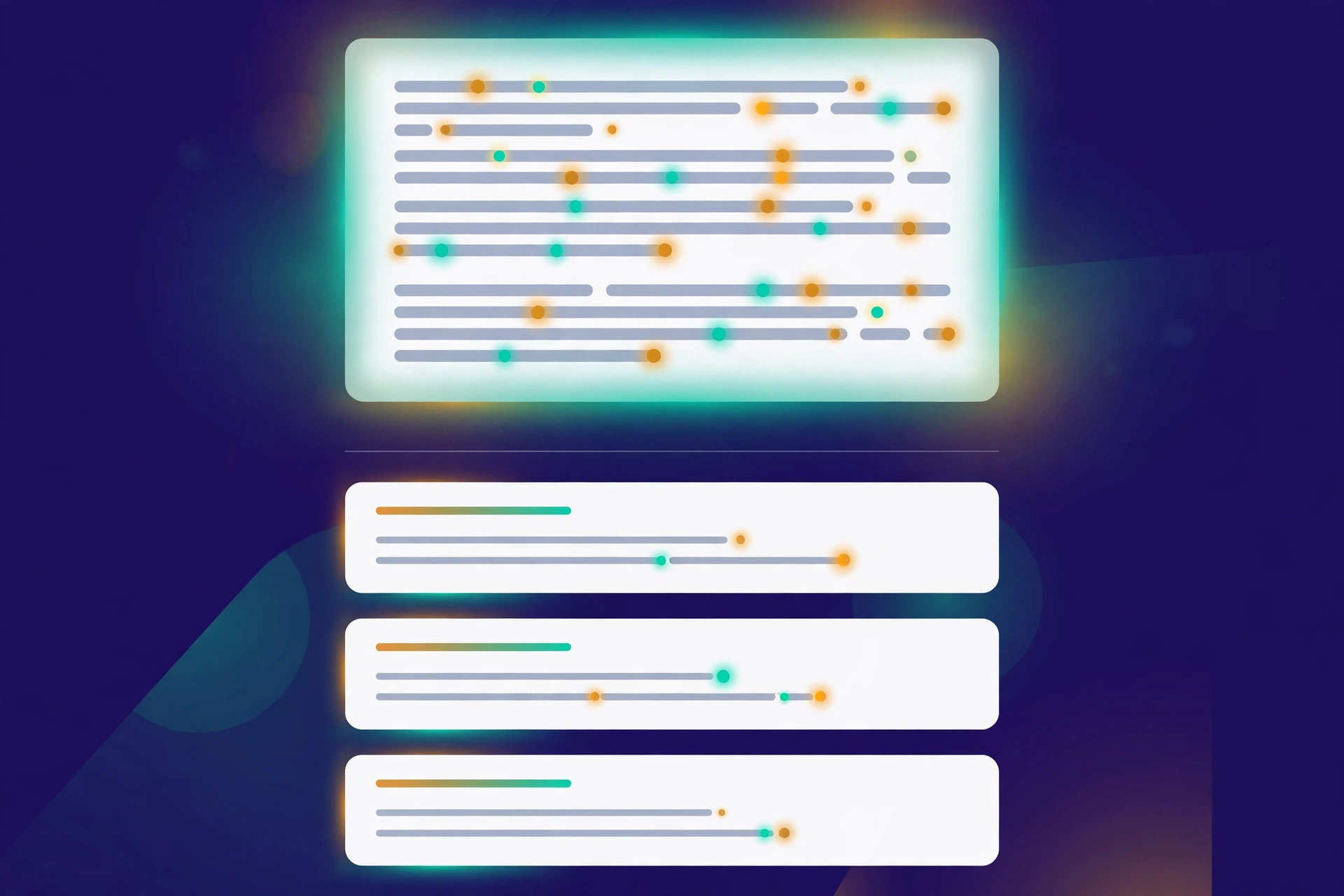
Citation models lift structure, not prose. The practical rules:
- One H1 that matches the question the page answers.
- H2s phrased as questions or as clean topic labels; H3s as the sub-answers.
- Tables for comparisons and prices — comparison tables are among the most frequently cited page elements we see.
- Bulleted lists for steps, requirements, and checklists.
- Definitions in bold or in a definition-style block near the top.
Keep paragraphs short. Avoid nesting a key fact three paragraphs deep inside an anecdote. If Screaming Frog crawls your page, the outline it reports (H1 → H2 → H3) should read like a table of contents. If it does not, neither will the AI.
Content patterns that win citations now
Structure gets you considered. Content gets you chosen.
Original data beats synthesis
Every AI answer can synthesise what is already on the web. What it cannot do is generate data that does not exist. Client surveys, pricing benchmarks, performance tests, before-and-after measurements — these are the highest-value citation assets on the internet right now, because the model has nowhere else to get them.
You do not need a research department. Our studio's most-cited pages are small-sample studies: "we timed 30 AI Overview queries", "we audited 12 client sites". Name the sample size honestly. Small real data beats big invented data — and Google's 1 October guidance explicitly punishes the latter.
Local proof
For Pakistan-market content, add the proof competitors skip: PKR pricing, named Pakistani tools and platforms, Lahore/Karachi/Islamabad specifics, regulatory references. For US content: named vendors, USD ranges, state-level nuance where it matters. Local specificity is quotable because it is rare. A generic "SEO audit costs $500–$2,000" loses to "a full SEO audit for a Lahore-based e-commerce store runs PKR 85,000–180,000" every time — for the query it actually matches.
Entity clarity
AI citation systems resolve entities: they need to know what your company is, what your product does, and what topic your page covers. State these plainly on every page. "AISquadX is a design-led engineering studio in Lahore building websites and SaaS products for clients in the USA and Pakistan" is not marketing copy; it is an entity declaration. Repeat a consistent version of it in your about page, author bios, and footer. We link ours from the studio's about page and keep the wording stable everywhere it appears.
Google's 1 October guidance, decoded
On 1 October 2026, Google updated its content guidance with unusual bluntness. Three points matter for citations:
- AI-generated material must be human-checked before publishing — "critical" was Google's word. Publishing unchecked AI text now carries explicit risk. In practice, this means a named human editor and a visible review process. We have our editors sign off in the page's metadata.
- Main content is judged on Effort, Originality, Talent/Skill, and Accuracy. Read that as a citation rubric: the model is being steered toward content that demonstrates work. Show your work — methodology, screenshots, raw numbers.
- Fake author profiles are warned against. The era of "Dr. Jessica Miller, SEO expert" stock-photo bylines is over, officially. Real names, real credentials, real accountability. Our clients' author pages now carry verifiable professional histories, and citation rates on bylined content are visibly better than on anonymous pages.
The technical layer: schema, entities, author signals
Content wins citations; technical SEO makes sure the system can see it.
JSON-LD that actually matters
Three schema types carry most of the weight for citation visibility:
- Article schema (or BlogPosting) with headline, datePublished, dateModified, author, and publisher. Keep dates honest — AI systems cross-check freshness, and a stale dateModified on a "2026 guide" is a red flag.
- FAQPage schema mirroring a real on-page FAQ. The FAQ at the end of this article exists in both places for exactly this reason.
- Organization schema on the homepage declaring your entity: name, sameAs links (LinkedIn, Crunchbase, GitHub), areaServed. Inconsistent entity data across the web is the quietest citation killer we see in audits.
Validate everything in Google's Rich Results Test before publishing. Broken JSON-LD is worse than none — it tells the parser your house is messy.
Consistent entity descriptions
Your one-sentence company description should be identical — or nearly identical — across your site, LinkedIn, Clutch, GoodFirms, Crunchbase, and your Google Business Profile. Citation models reconcile entity mentions across sources; divergence creates doubt, and doubt costs citations. This is unglamorous work. It takes an afternoon with a spreadsheet. Do it.
Real authors, real bylines
Every article needs a named author with a bio page that proves they exist: photo, credentials, links to professional profiles, other articles they have written. Author pages should themselves carry Person schema. For agencies, this doubles as a sales asset — prospects read the byline before the article. If your services page promises senior practitioners, the blog should prove it with named humans.
What a citation audit costs
Pricing from our studio's observed range for AI citation work:
Prices move with query volume and site size. The snapshot is the right starting point for most businesses: it tells you whether you have a citation problem or a demand problem before you spend more.
The measurement problem
You cannot optimise what you cannot see. Citation measurement is the messiest part of 2026 SEO — and improving fast.
Search Console's generative AI reports
Around 9 October 2026, Google began adding generative AI performance reporting to Search Console, alongside multi-country filtering that lets you split performance by country — useful for anyone serving both the US and Pakistan, and covered well in Cyberset's Search Console multi-country filtering guide. These reports show impressions and clicks where your content surfaced in AI experiences. The data is new, the definitions are still settling, and the numbers will not reconcile neatly with your old reports. Use them directionally: which pages appear, which queries trigger them, how the trend moves month to month. Do not try to build a CFO-grade dashboard on week-one data.
Manual citation checks
Until tooling matures, the honest method is manual: a spreadsheet of your 30–60 most important queries, checked monthly in a clean browser session (logged out, consistent location), recording whether an AI answer appears, whether you are cited, and in what position. Tedious. Also the only method we fully trust right now. We run these for clients alongside Search Console data, and the manual sheet catches things the dashboards miss — like a competitor's page displacing ours in the citation slot while our organic rank holds steady.
Why rank trackers broke
Citation tracking broke the old tooling. Most rank trackers spent 2026 scrambling to detect AI Overview presence at all, let alone per-brand citation share. Ranktracker restored its Top 100 SERP tracking on 1 October after testing more than 20 platforms — a sign of how fragmented the measurement landscape is. Ahrefs and Semrush both now ship AI-visibility features; treat their citation metrics as relative indicators, not absolute truth. When two tools disagree on your citation share, believe the manual sheet.

What to stop doing
The October update rewards a different kind of publisher. Four habits are now actively harmful.
Scaled content abuse
Google's September 2026 spam update ran from 24 September to 8 October, global, all languages — and its guidance explicitly targets low-value programmatic SEO and scaled content abuse. The 5,000-page "best X in every city" playbook is a liability now. One cited, data-rich page outperforms fifty spun variants. We have watched clients' thin programmatic sections get deindexed while their original guides gained citations. Volume was never a moat; now it is a target.
Keyword stuffing, still
It sounds antique, but AI-era stuffing has a new form: repeating the target question in every heading "for the AI". Citation models do not need the question repeated; they need the answer clear. Write for the question once, answer it directly, and let the structure do the rest. Pages that read like they are shouting at a robot get summarised without credit.
Teaser content in a zero-click world
Any content whose business model is "withhold the answer until the click" is dead in AI search. The model will answer the question from your competitor instead, and cite them. Give the full answer on the page. Your commercial edge is not the information — it is the implementation, the data, the service behind it. This is the hardest mental shift for publishers, and the most necessary. A useful starting point is understanding how zero-click search actually behaves in 2026 before redesigning your content funnel around it.
Brand searches as the moat
Here is the constructive part. Branded queries are the one query class AI answers barely dent — and brand presence inside AI answers is now measurable. Our branded-search playbook covers the mechanics, but the short version: get your brand into the answers. Publish the definitive page about your own product, your own pricing, your own methodology. When the AI answers "who is the best studio for X", the cited sources are the ones that stated their case clearly. If you want the longer treatment, read our branded-search playbook for the AI era and our earlier guide to SEO for AI search.
Frequently asked questions
How do I get cited in Google AI Overviews?
Earn citations by writing pages that answer one question completely: a 40–60 word direct answer near the top, named data with sources, clear H2/H3 structure, Article and FAQPage schema, and a consistent entity description across your site and third-party profiles. Original data and local proof win far more often than polished summaries of what everyone already wrote.
Do I need to rank number one organically to get cited in an AI Overview?
No — that is exactly what changed. The overlap between the top-10 organic results and AI Overview citations collapsed from 75% in mid-2025 to 17–38% in early 2026. Citation selection rewards quotable, well-structured answers, not raw position. A clear page ranking seventh can out-cite a vague page ranking first. Optimise for quotability and position in parallel.
How long does it take to start appearing in AI Overviews?
In our studio's observed range, 4–12 weeks after publication for a well-structured page on an indexed site, assuming genuine search demand for the question it answers. Newer sites and thin topical coverage take longer. Refreshing and expanding existing cited pages is usually faster than publishing new ones, because the citation slot is already warm.
Are AI Mode citations different from AI Overviews citations?
The selection logic is close, but the stakes differ: Fuel Online measured a 93% zero-click rate on tested AI Mode query sets, far above classic search. AI Mode also surfaces video results with clickable creator and publisher names, so YouTube and branded video content count as citation assets there. If you produce video, give every upload a real title, description, and byline.
Should I block Google from using my content for AI training?
Almost certainly not. Blocking your content removes you from both answers and citations, while competitors keep the visibility. Google is now pushing far more inline links into AI responses after the October 2026 update — and those links sit higher, with early analysis of Google's October links announcement suggesting cited sources will see real click growth. Being present beats being principled on this one.
What does an AI citation audit cost?
Our studio's observed range: a 20-query citation snapshot runs $250–400 (PKR 70,000–115,000); a full 60-query citation audit with technical and entity review runs $900–1,500 (PKR 255,000–425,000); monthly citation monitoring runs $400–650 per month (PKR 115,000–185,000). Most businesses should start with the snapshot — it tells you whether you have a citation problem or a demand problem before you spend more.
Is it worth chasing citations if hardly anyone clicks the links?
Yes, with caveats. Only around 1% of AI Overview sessions produce a click on a cited source (Pew Research Center; Google disputed the exact figure), but cited brands earned roughly 120% more organic clicks per impression than uncited ones in Seer Interactive's 2026 study. FirstPageSage's 2026 AI traffic impact report adds that visitors from AI SERPs convert better than average. Citations are becoming the brand-awareness layer of search — and they still feed your conventional rankings.
Getting cited is a craft, not a trick. Direct answers, named data, clean structure, honest schema, real authors — then measure it properly and iterate. Google's October update made the citation economy real; the publishers who treat it as a discipline, not a hack, will own the next two years of search visibility. For a broader framing of the zero-click landscape, CrediblePR's zero-click search guide is a solid companion read, and BetaNews' coverage of AI Mode's inline links and click data tracks how the October changes are landing.
If you want this done for your site rather than reading about it, talk to us. We run citation audits, rebuild pages for citability, and track the results month to month — for clients in the US, in Pakistan, and everywhere in between.
Share this article
Keep reading
All articles
Meta Ads in October 2026: 7 Changes That Hit Your Budget
Meta ads changes in October 2026: Andromeda retrieval, the Customer Lifecycle toggle, organic link-post caps, and new ChatGPT and Google inventory. What to do now.

Google's October 2026 Content Rules: The AI Content Survival Guide
Google's AI content guidelines (October 2026): manual fact-checking now critical, fake author profiles count as deception. Our studio survival playbook.

AI Overviews Now Answer Your Brand Searches: The 2026 Playbook
AI Overviews now appear on branded searches over 80% of the time. Our 2026 playbook shows how to audit your brand summary, fix bad AI answers, and own it.
Next
Tell us what you're building.
A plan, a timeline and a fixed price within a day. Nothing starts until you agree to it.